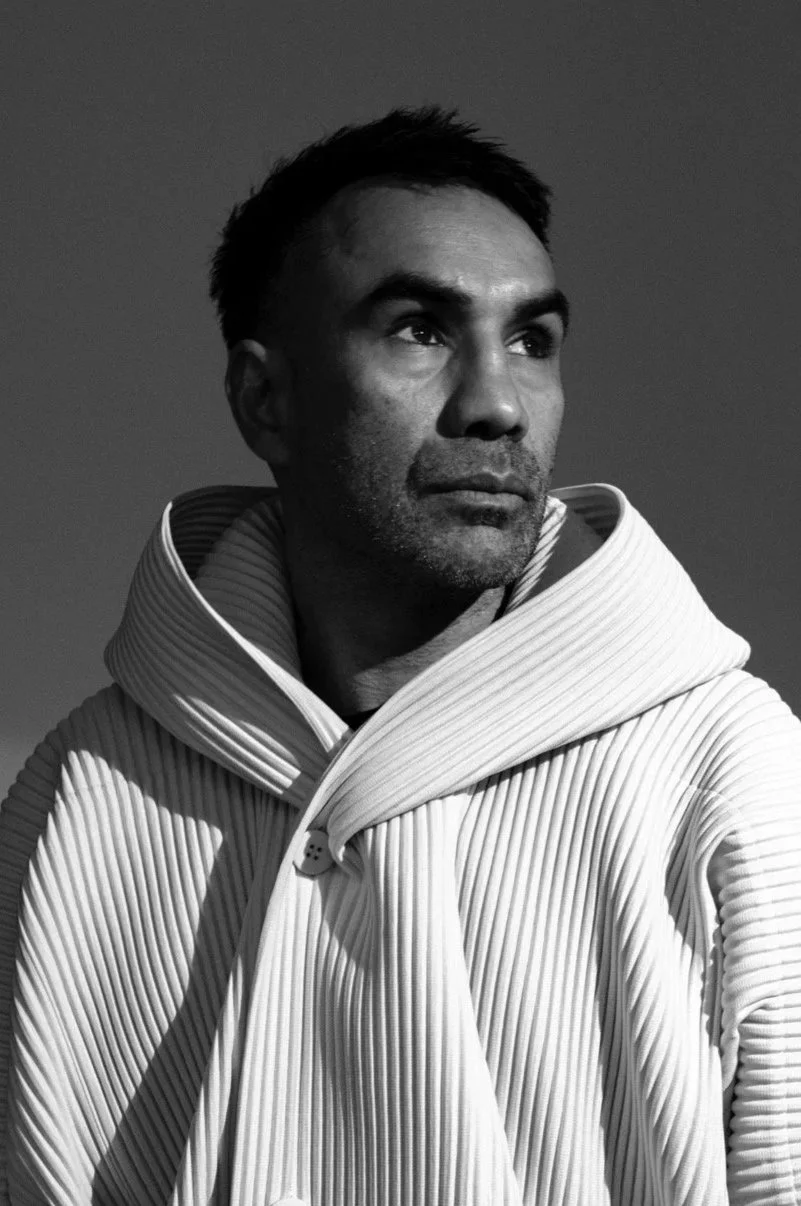
In a world of quick-fix content and disposable culture, Das Spezial is a proud contrarian. The ever-evolving music and visual art collective has been built around core principles of creativity, exploration and community. It's a middle finger to the era of AI slop and clout chasers, championing the patient craft that goes into making a beautiful record and leaving the doors wide open to unknown possibilities with every new release. To get a handle on this malleable endeavour, Oli Warwick connected with the dreamers at the heart of the project.
"Everything we do has to be art," says Shahab Notghi, banging on the table to punctuate his point. He drums on the table a lot, habitually seeking out a rhythm to add dynamism to every impassioned statement. We're sat in the September sunshine in the tranquil surroundings of Kingston Maurward, a rural estate in Dorset. Notghi recently used the spacious main hall of the Georgian country house as a recording location for Das Spezial, in line with his increasing interest in spatial acoustics as another layer in the song-making process.
Das Spezial has exponentially grown in the past seven years through the constant drive of Notghi's curiosity and commitment. What started as a solo experiment with modular synthesis now encompasses a team of songwriters, musicians, vocalists, engineers, designers and more besides. Notghi's closest collaborator in developing the Spezial sound is Stew Jackson, a multi-instrumentalist whose deliberately low-key public profile masks a staggering hit-list of credits on some of the most important records of the late 20th and early 21st Century. Also frequently involved are Drew Morgan—a Royal Academy-trained cellist, arranger and composer—and Ewan Pearson, a world class mix engineer, remixer and producer with chart-topping credits alongside a rich underground dance music legacy. As Notghi reveals throughout our conversation, these are but some of the known and lesser-known names who are drawn into the energetic whirlpool of Spezial.
To get a sense of what Das Spezial stands for, it makes sense to go back to the beginning. Notghi arrived in the UK as a small child – a refugee from post-revolution Iran. When he discovered the rave scene in the 1990s, he wholeheartedly embraced the culture, creativity and passion he witnessed blossoming around him. It was where he found solace and community as a photographer, and while he moved on from that world on a personal level, the egalitarian idealism of the golden era stayed with him. He was starting to explore music production himself, making club-oriented tracks without a particular creative goal in mind, but he knew he was a long way short of the music made by his biggest inspirations.
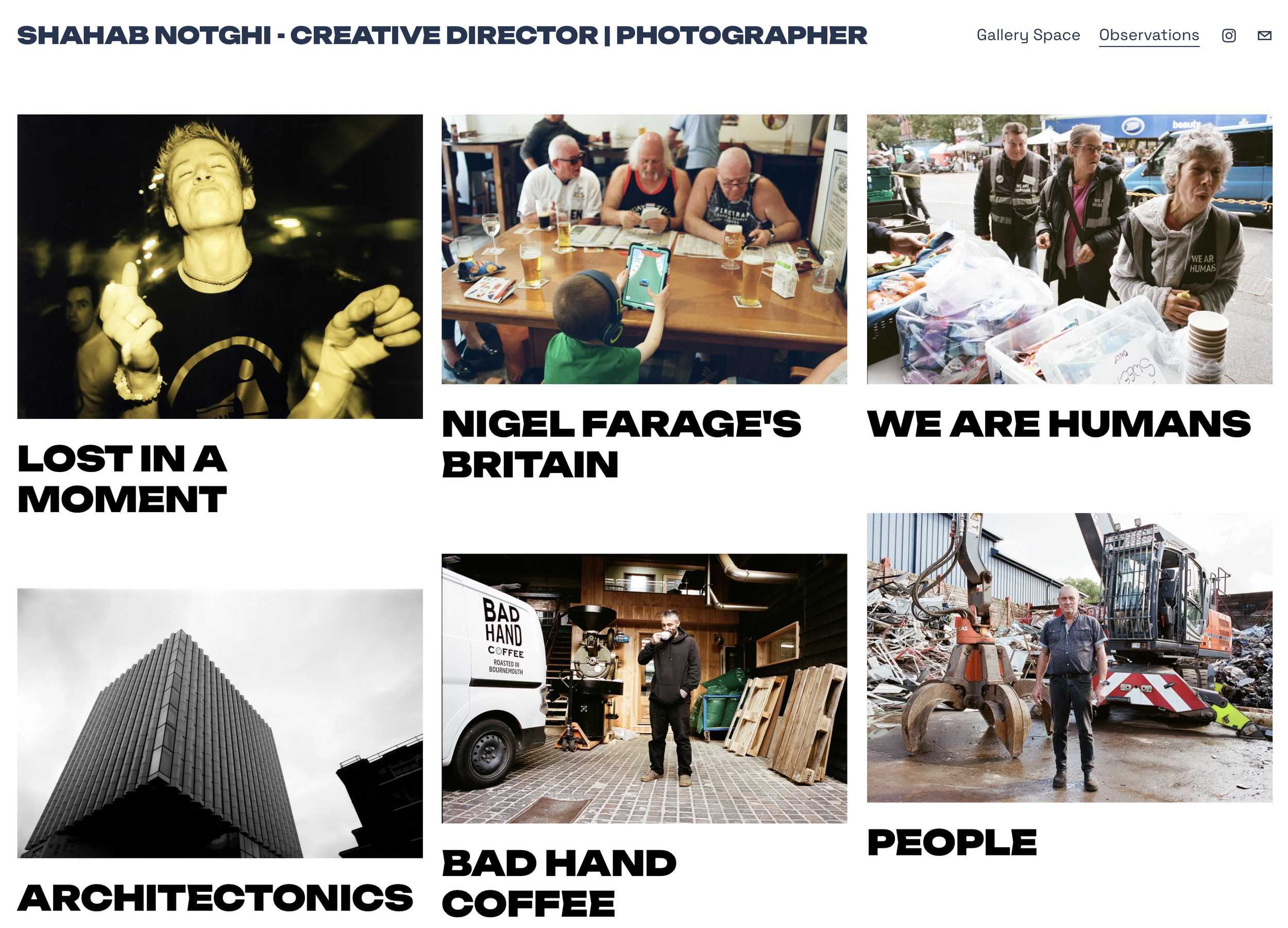
"I always admired Radiohead, The Chemical Brothers and Massive Attack," Notghi explains. "I was fascinated by how they made music at that level. I'd learned how to use DAWs but I hated everything I'd made. I wanted to learn how to make music like those bands."
It wasn’t just the sonic impression of those heavyweights that inspired Notghi. Through his own experiences and his fervent study of his inspirations, he was already well aware of the independent, grassroots and collaborative spirit that lay at the foundations of these projects, no matter how much they had grown into chart-topping legends in the meantime. That spirit informs Das Spezial to this day, as Notghi pursues the flashpoint of creation with the best artists he can reach across every discipline you’d care to think of. In terms of who he’s able to reach, Notghi’s core strength lies in extreme determination and focus, which is precisely how he’s forged connections with industry-leading producers, players and visual artists.
It all began with applying himself to the mission of decoding the tangled production mysteries of those 1990s alternative giants. Notghi combed the credits to understand who was helping create some of the seminal albums he was obsessed with. This led to contacting The Chemical Brothers' agent, not to chase down a studio session with Tom Rowland and Ed Simons, but rather to reach their engineer, a man widely known as Steve Dubs. The agent warned Steve Dubs was a challenging character to work with, but for a sizeable fee he'd meet with Notghi.
"Go to London," said the agent. "He'll meet you. He'll take your money, and then after that it's down to you."
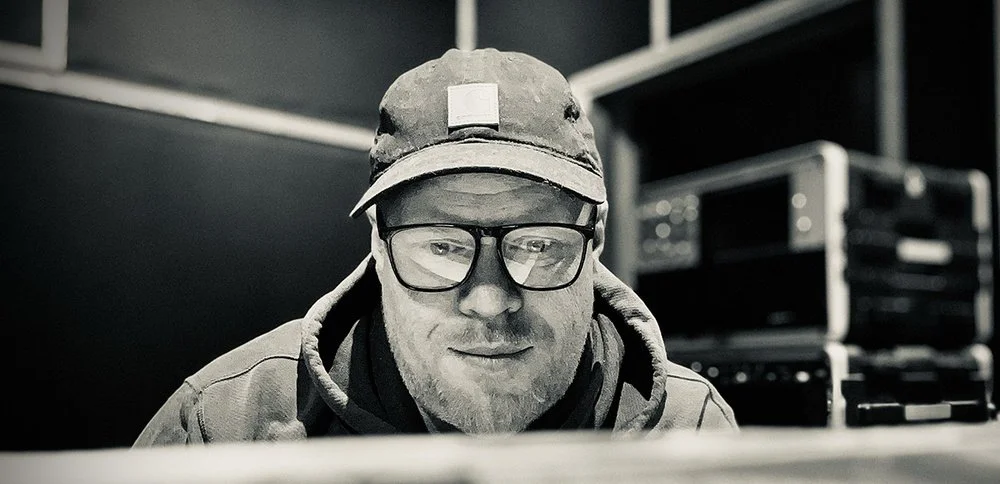
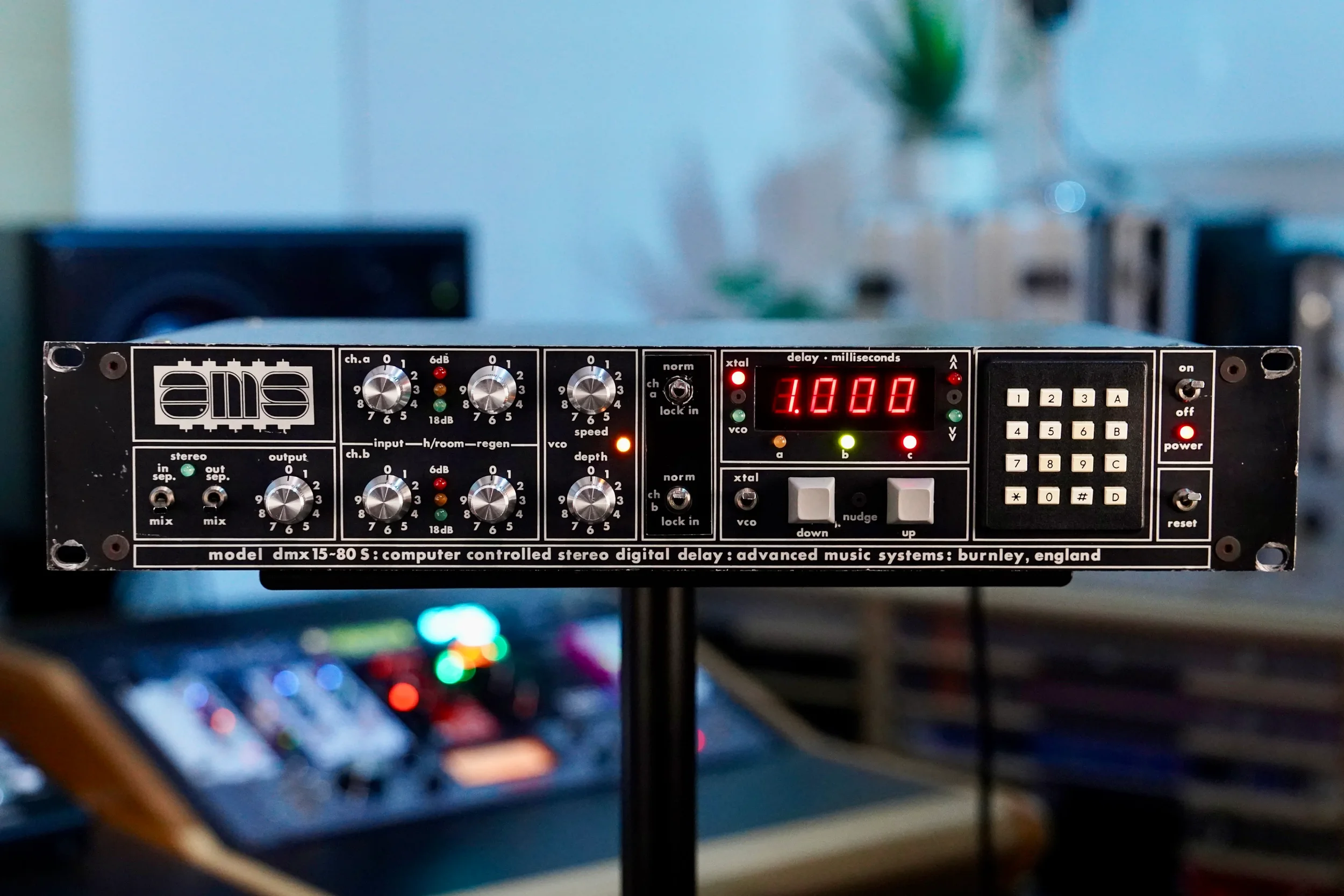
"I took [Steve] tracks to play, and he was like, 'These are all shit,' and I was like, 'Oh, what are we gonna do now?' I just asked everything I could about how they made the sounds on The Chemical Brothers tracks, and he told me about Buchla modular synths and the AMS units."
That was the beginning of Notghi's journey into the bottomless well of music production hardware. Dubs said he could visit again for another princely fee, so Notghi spent six months raising the funds, and procured some of the seminal Buchla modules in the process. When he returned, Dubs' appraisal of Notghi's new tracks was just as blunt, but Notghi's persistence and passion was paying off and, through hours and hours of studio time, he managed to gain Dubs' trust and glean precious knowledge from an engineer at the top of his game.
"Twice a week I was driving to Brighton and bringing Steve shit music," Notghi recalls, "but we were sending the shit music through these boxes and making sounds, and that went on for years. I learned a dark art from him. A few times I drove the two hours up there from Bournemouth and he was like, 'I'm not in the mood. Come back.' I kept coming back and he kept teaching me more and more. It got to the point I figured out how to make the most amazing noises, but they were just a bit empty."
Notghi felt the next logical step in his musical development was to start working with vocals, but Dubs suggested the music would start to sound too much like The Chemical Brothers. He may play down the tracks he made during those years of sonic exploration under his Paradise Circus alias, but EPs such as Sifar highlight his mastery of noise-wielding electronica. Still, he was focused on making fully-fledged ‘songs’ charged with tangible emotion and, as he puts it, ‘human spirit’, namechecking benchmark tracks like Massive Attack’s ‘Unfinished Sympathy’ or Radiohead’s ‘Bloom’.
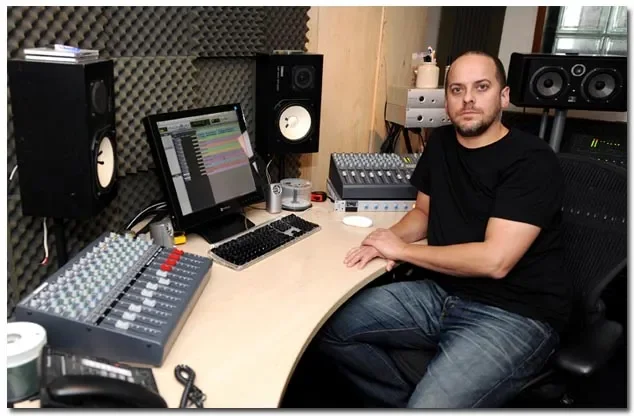
While he was working with mixing engineer Bruno Ellingham, Notghi asked for help tracking down a musician who could come on board with the project and add compositional depth to the Spezial sound. Ellingham suggested multi-instrumentalist Stew Jackson as a potential collaborator who might bring a more musical dimension to the project. Based in Bristol, Jackson is the consummate studio musician, working six days a week across all kinds of projects. When Notghi discovered Jackson worked closely with Massive Attack, he knew he was heading to the right person.
From the first sessions with Jackson, that quickly led to the Kids 1 EP, Notghi was learning the craft of songwriting — harmonising, structure and arranging. It quickly became apparent the project was calling for vocalists to round out the potential of the music. The first singers were people Notghi encountered by chance in his day-to-day life, such as his barber's daughter, Hannah Kilgore, quickly drawn into the Spezial process to write lyrics on the spot as the project progressed from one song to the next. With Notghi's relentless enthusiasm and Jackson's quick-fire musical instinct, the music quickly piled up. Drew Morgan was the next to be woven into the tapestry — likewise based in Bristol, Morgan's accomplished background in string arrangements is matched with experience in experimental, electronic projects. As such, he was a perfect fit for the trajectory of Das Spezial.
"During this whole process, I was buying all kinds of studio gear," Notghi reveals. "I was hitting up Abbey Road to find out about Chandler microphones and getting them at a fraction of the price. I'm just persistent. I've learnt all the electronic stuff, but I didn't record as a band, so I didn't know what a valve mic was. Working with Stew, I was running around recording drums, learning how to record bands. Now, I've learned how to record overheads and everything, but with the sound of the 60s and 70s. That's why the new EP sounds big."
The new EP Notghi refers to is Hope Against Hope, the latest step in the whirlwind Das Spezial story that features India Blue, Carmen Mellino and Hannah Kilgore on vocals. It's the most complete realisation of the ambition that pushes the project forwards, matching brooding melancholy with the swooning romanticism of Morgan's string arrangements, shot through with Notghi's dynamic electronic textures. Along the way, Jackson's appreciation for Beatles' pioneering use of the natural reverb in physical spaces sparked the idea of on-site recording. Notghi has applied that approach to the striking modernity of the Arts University of Bournemouth's drawing room and the grandiose classicism of Kingston Maurward's main hall, and he has his sights on even grander settings.
"Stew and everyone always laugh because it's like, you mention something to Shahab, I'm coming back next week saying, 'I've got a Royer ribbon mic,' or, 'We're recording at the Tate.'"
In a relatively short space of time Das Spezial has drastically progressed from its purist electronic beginnings, but Notghi still honours the dance music roots that started him on this path of exploration. Inviting remixers to re-imagine the Spezial songs creates a direct line to the dancefloor, and it's telling he's chosen artists renowned for their own leftfield tendencies. From Daniel Avery to Matthew Herbert, Roman Flügel to Henrik Schwarz, the reinterpretations of Spezial and Paradise Circus tracks speaks to the quality contained within the originals, sparking interest in producers who are never short of invitations to bring their renown and flair to someone else's sounds.
The same can be said for visual collaborations, whether it's reaching out to screen-printing skateboard designers Acrylic Minds or Japanese video producer nouseskou, who has produced the video that accompanies the release of Hope Against Hope.
"I found nouseskou online through [celebrated photographer] Nick Knight," Notghi explains. "They're expressive dancers, and one of them does AI stuff. I contacted them and they looked at Spezial and said they'd do it. It's so exciting that, internationally, we can work with these talented people. The beauty of it is, it's not happening because we've got loads of money. It's about just being real."
It becomes clear trying to follow the arc of Das Spezial there's no great strategy at play. There's unmistakable momentum, and a tangible upward arc of skill and care put into every aspect of the project, but it's not aiming for a fixed creative destination. Notghi's quest, and in turn that of his collaborators, is one of chance and playfulness. "Music for the sake of music," is how Jackson succinctly sums up the project. Morgan has a broader take on his part in the process:
"Across Spezial’s music, there’s a sense of experimentation and leaving space for people do to their thing," he points out. "Shahab doesn’t direct—he lets things happen and then points out the things that are exciting so more of those happen, which we can then sculpt together."
"If you think of the team, I'm not dictating them," Notghi concurs. "We just see what happens. We never know what we're making next. The main thing is making art the best it can be, and that process will guide us. Along the way, we pulled in some of the best people in the country."
For now, Das Spezial exists as a breadcrumb trail of releases — various entry points on the project's journey that all feed into this spirit of creative adventure. Naturally, Notghi throws around all kinds of possible future endeavours from specific technical details to bucket list escapades. Even though Spezial is entirely independent and self-funded, the project has already proven to only be limited by Notghi’s imagination.